
"Despelote" Renders the Remembered Emotional Weight of Football
The video game "Despelote" is a beautiful autobiographical depiction of programmer Julián Cordero during Ecuador's qualification for the 2002 FIFA World Cup.
Today, on June 14th, the Ecuadorian National Football Team play their first match of the 2026 FIFA World Cup against Côte d'Ivoire. With players like Piero Hincapié, Willian Pacho, and Pervis Estupiñán in defense and one of the best midfielders in the world Moisés Caicedo all under the manager Sebastián Beccacece who rarely loses games, many are expecting the team to have a surprising run in the tournament; that is as far as surprises can go when a bunch of people are calling it. Ecuador historically have never been this good or well-acclaimed. La Selección’s fortunes turned with the millennium when the national team qualified for its first World Cup ever in Korea Japan 2002.
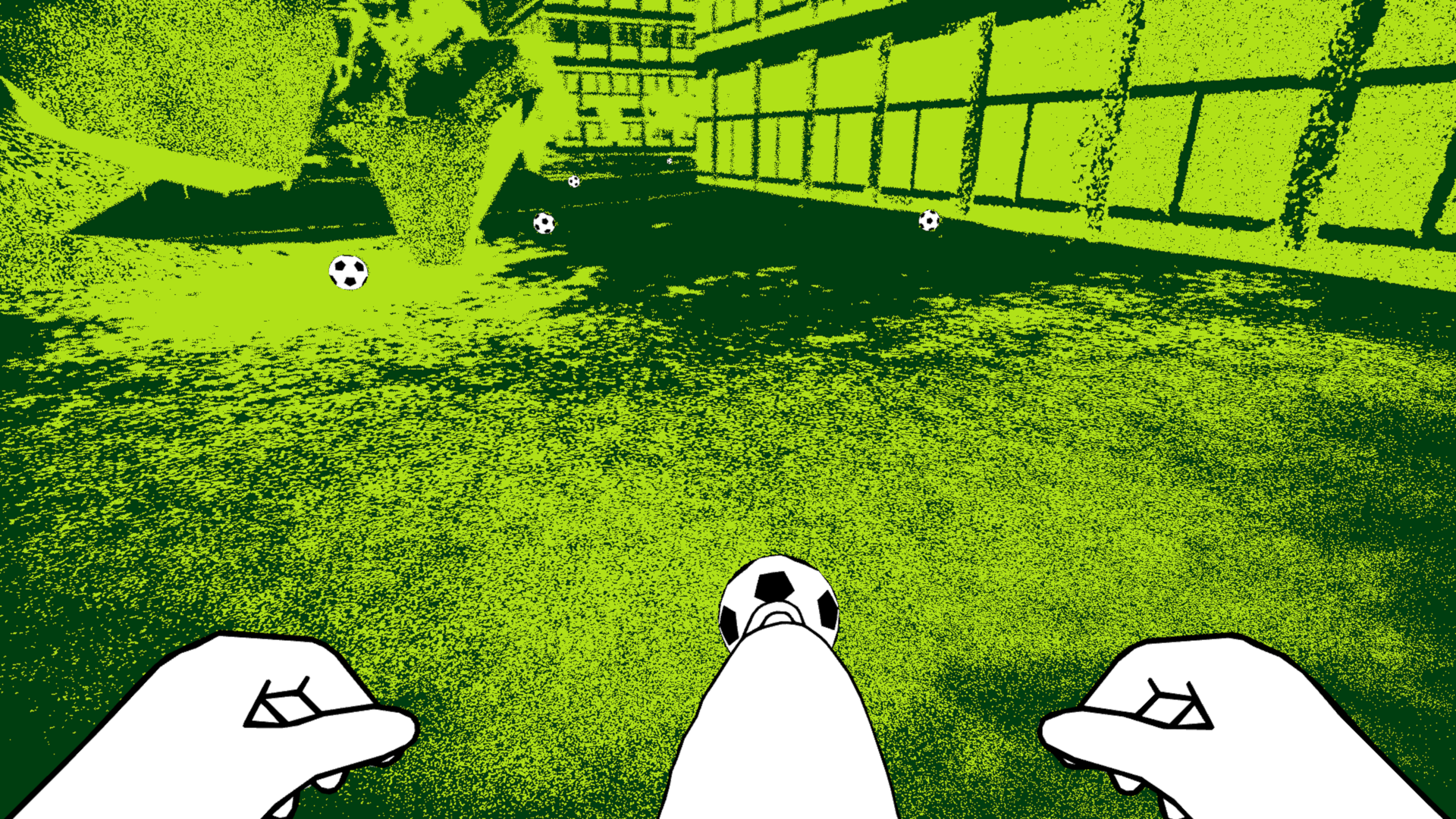
The video game Despelote covers that time period in 2001 during Ecuador’s World Cup qualification run and the collective national energy that grew after Ecuador’s late winner against Peru which made the dream of making it to the tournament feel possible. The game is told through the perspective of an eight-year-old Julián Cordero, the programmer and developer of Despelote. As Julián, you primarily wander along the streets surrounding a park in Quito, Ecuador depicted in a 3D cityscape colored in two-tone Gameboy styled graphics whose palette shifts with each different chapter, running through the conglomeration of buildings shadowed upon by the nearby towering mountains. The images and places are contoured in a pixelated haze as you move through this world and experience its people.
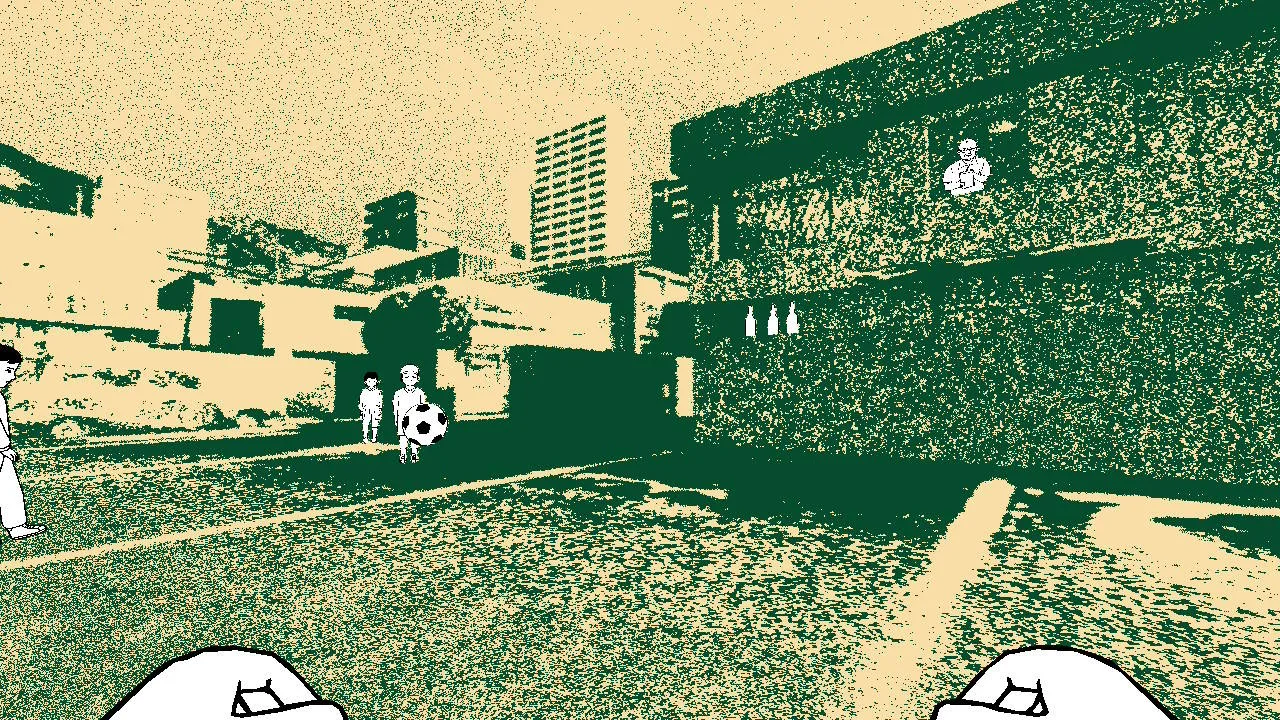
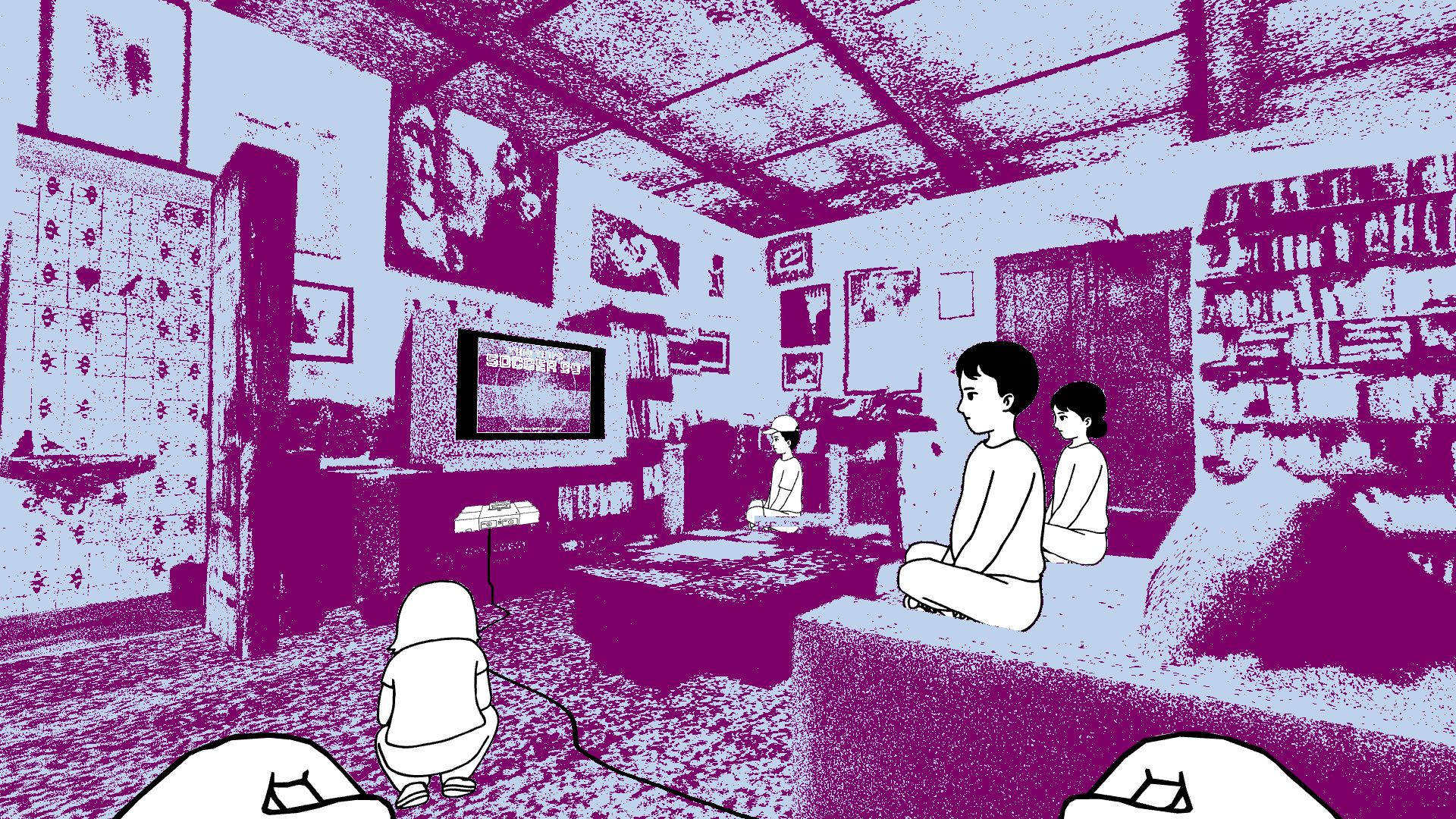
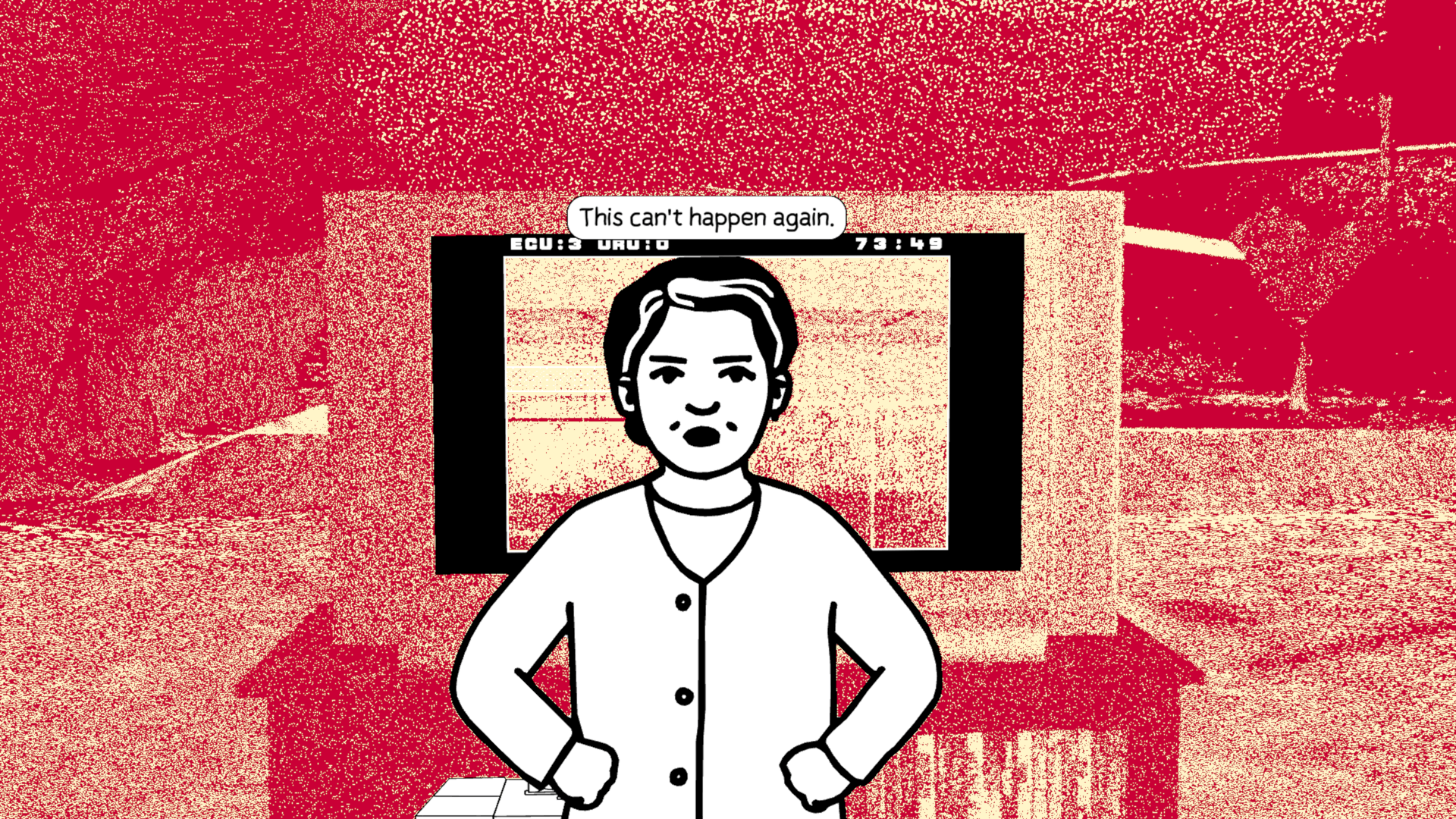
In the game, Julián goes to school, idles at home with his parents and sister, and plays at the park with his friends. You can interact with the people, depicted in 2D black and white silhouettes, by simply just going “hey.” Much of the gameplay centers around dribbling and kicking a football, between your friends and along the streets. In each chapter, marked by match days against other South American teams in 2001 for Ecuador’s World Cup qualifying, you can feel the collective national excitement permeating throughout the small sample of city, with posters on the walls, a few football fans cheering, and grainy footage from the matches on TVs around the game’s map. As Julián, you can look up at them to see both the score and the faces of the nation’s footballing heroes.
Despelote is one of those video games made with the intention of being a piece of art, commenting on the communal aspects of football, but also serving as an autobiographical piece around Julián Cordero’s experiences as a child growing up in Quito,. Though Cordero wasn’t eight years old in 2001, he was born in 1997. A lot of these memories are intentionally fabricated, centered around scenes that Cordero likely only had an impression of in his four year-old mind. The games visual aesthetic, with those washed out, two-tone pixelated graphics, also adds to this concept with the memories of place being manually reconstructed in a nostalgic medium. These reconstructed memories, even if they aren’t exactly what had happened, artfully convey the immense feeling of these moments in 2001. In this way, Despelote is outrightly a work of autofiction, with these somewhat fictitious elements enhancing a true narrative to convey the emotional weight that Julián feels when he remembers it, morphing into what becomes the genuine form of this time and place for him.
Cordero states in the game that Ecuador qualifying for the World Cup was his first memory. With that sentiment, Despelote becomes a narrative about a specific aspect in growing up where you become much more cognizant to the people and the broad world outside of yourself. I felt a lot of this sentiment through football, watching the 2014 World Cup in Brazil and seeing all these people from across the globe come together to celebrate one another with the common unifier in football. A similar thing happened in the 2018 World Cup in Russia, but with the narratives around it, that tournament further broadened my perspectives to the challenges that people around the world face.
In Despelote, along with the ineffable, coalescing spirit around the success of the Ecuadorian national team, Cordero mentions the nation’s economic crises around the time. In some interludes between the gameplay, he talks about the social unrest, with a newspaper man announcing the upcoming matches along with political developments, and flashes of groups of people protesting. When showing these protests, Cordero mentions the collapse of the Ecuadorian sucre as a form of currency. Ecuador struggled economically throughout the 20th century, where only in the ‘80s did the country create major commercial output with oil and agricultural exports. However, during the ‘90s, along with general national political instability, the prices of these goods collapsed leading to even wider spread poverty increasing public debt, and banks issuing out high-risk loans unlikely to be paid back with an expectation that the government would bail them out.
The Ecuadorian government enacted taxes and pauses on withdrawals so that banks wouldn’t fail, which would mean that people couldn’t access their money. The eventual long-term stabilizing solution of switching from the sucre to the U.S. dollar caused massive losses of wealth among the people with the currency exchange rates. This led to then President Jamil Mahuad receiving a 6% popularity rating and being ousted out in a generally popular coup.
The Ecuadorian national team was also directly caught up in this political turmoil during their World Cup qualification run when, as Cordero mentions in the game, head coach Hernán Darío Gómez was shot in the leg right before their game against Peru. The attack came when Gómez was accused of leaving out Dalo Bucaram from a youth national team. Bucaram was the son of Abdalá Bucaram, a former Ecuadorian president who was removed from office in 1997 after being determined mentally unstable. Gómez was shot by a bodyguard of a political ally of Bucaram’s after confronting him. Gómez put in his resignation after receiving treatment but returned after the Ecuadorian players pleaded for him to come back.
The sucre collapsed during 1999 and 2000. Though Cordero references it when showing the protests, specifically the ones that happened in 2001 were organized by indigenous worker’s groups in the country, centered around increasing prices of essential goods like gasoline, and resulted in a shutdown of Quito when protesters took over the streets. Motivated by successive governmental failures, indigenous protests like this would decrease the power of the president and executive branch, and lead to a period that reduced debt and decreased poverty. Though technically separate, these protests were caused by the issues hastened from the sucre’s collapse. These protests were melded together in the mind of a young Julián, again generating the perspective of a child who may not have understood the whole picture at the time, but felt the weight of its significance just from walking through life in Quito.
Tackling these overbearing issues that informed Julián’s early life shows this seed of maturing already at a young age, absorbing the immensity from living in the conditions resulting from the economic crises. It’s grown at various points in the narrative of Despelote when it flashes to a version of Julián eight years older in 2009; events that likely happened when he was actually 16 in 2013. The game shows him training for the youth ranks of the football club Deportivo Quito, skipping out on practices, and getting caught drinking at a party by his mother, who’s mad at him not for partying but for lying about where he was. These snippets are less consequential than coming to terms with the inequalities of the surrounding world, but they get at more emblematic aspects of coming to age with personal freedoms and responsibilities.
All these scenes in Despelote are a reconstruction of memory for Julián, purposefully presented in the most nostalgic way possible to illuminate what he felt through the old, two-color pixelated video game aesthetic. As for when it all happens, when Ecuador qualifies for the 2002 FIFA World Cup in South Korea and Japan, Julián wanders the park left empty, hearing the echoing cheers from unseen people watching the match from their own home or in the stadium. When he kicks a football, the memory is deconstructed and he snaps into an abstract form of reality.
The pixels erase and reveal a Google Earth styled 3D scan of Parque La Carolina in Quito, the actual park much of the game’s map is inspired by. It feels uncanny with how still its depiction is, but it contextualizes and grounds Julián’s experience with a reflection by his older current self. During this, Cordero decides to just show the broadcast of the moment when Ecuador qualifies at the Estadio Olímpico Atahualpa in Quito, with a header after a quick run into the box by forward Iván Kaviedes, ensuring a draw 1-1 with Uruguay and participation in Korea Japan. As the camera pans towards the crowd in a wall of yellow, where amid the hovering chaos, all of the people’s elation is explicit in depiction as they embrace and celebrate one another as they were given the hope that better things could come for them and their national team.