
"Dry Leaf" by Alexandre Koberidze in a Pixelated In-Between
Georgian director Alexandre Koberidze's use of mid-2000s cellphone camera with "Dry Leaf" captures gorgeous pixelated scenes.
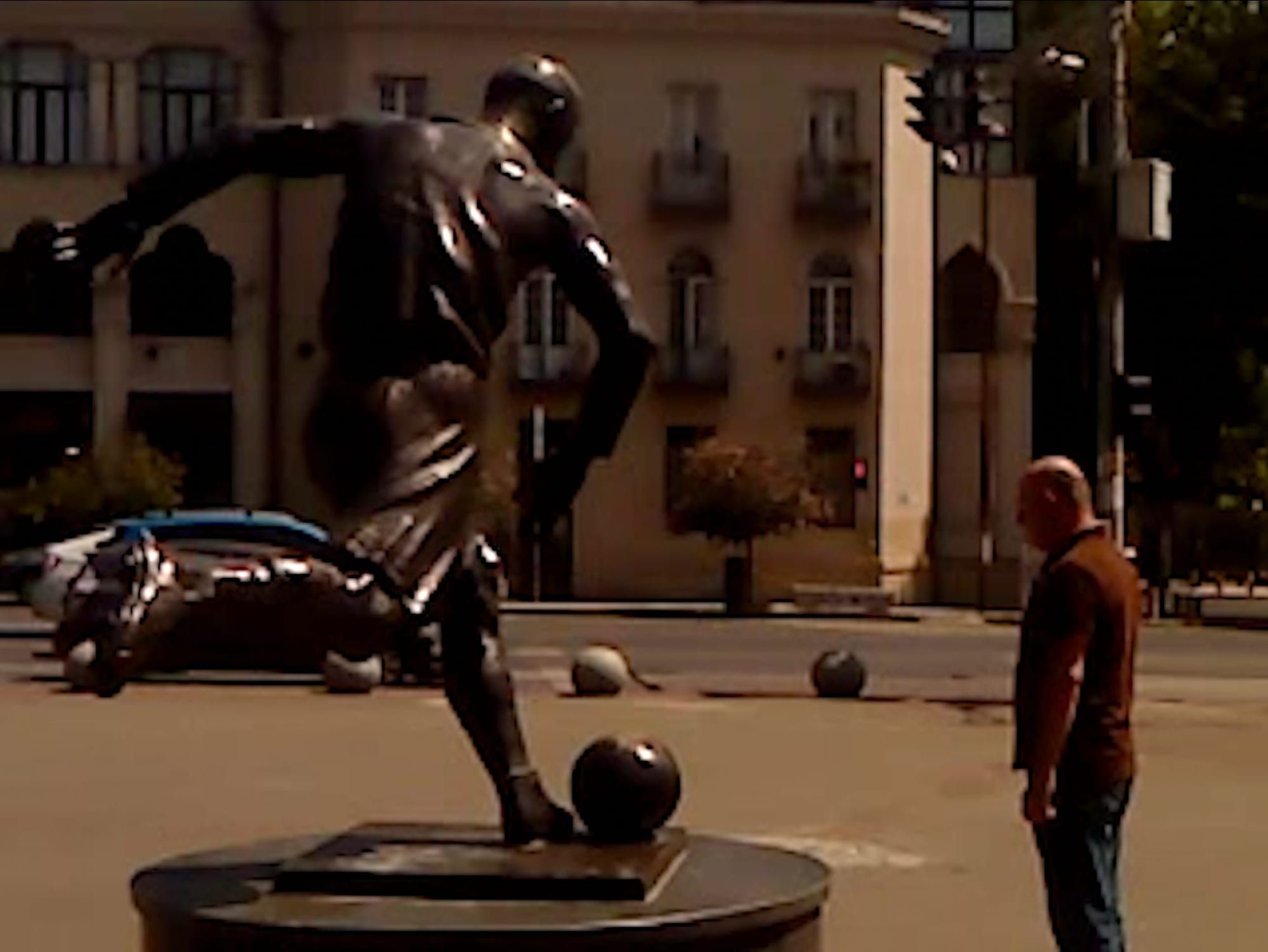
Dry Leaf premieres at FilmScene in Iowa City today, May 22nd, and will be showing for the next week until May 28th. This review contains spoilers that get more in-depth after each image.
Georgian director Alexandre Koberidze has a signature technique. For his 2017 film Let the Summer Never Come Again, he used his cellphone, a 2005 Sony Ericsson, to film the entire movie. During the production of that movie, he finally adopted a smartphone, but there was a more intangible quality attached to the Sony Ericsson that Koberidze couldn’t let go. So, he continued to carry it around with him, using the old phone’s camera to train his eye with how he saw and captured the world.
Koberidze has used this technique again for his most recent film Dry Leaf, a road narrative where a father Irakli (played by Kobirdze’s own father) searches with his companion, Levan for his daughter Lisa, who sent back a concerning letter after having been missing for six months. Irakli’s main lead comes from a sports magazine that his daughter was working for. From the magazine, he finds out that the last assignment given to Lisa was to take photos of football pitches across the country of Georgia.
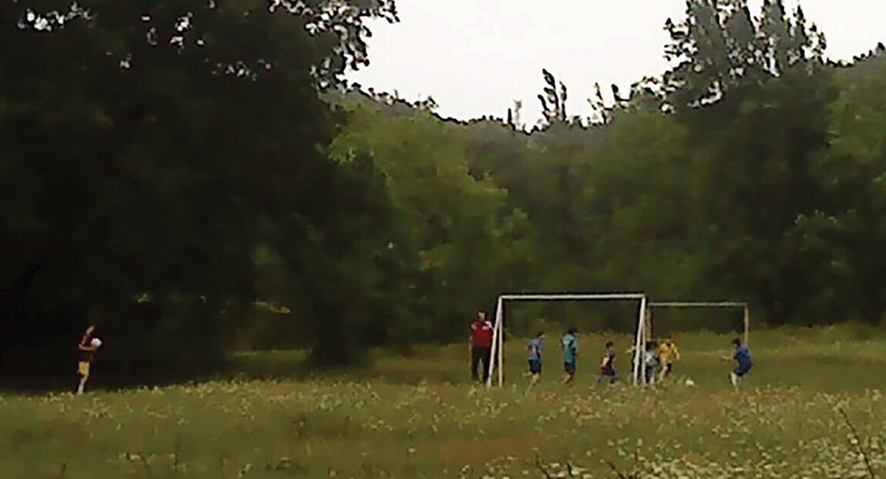
Almost the entirety of Dry Leaf is made of pixelated images of emerald, auburn, and maroon early autumn Georgian landscapes shot from the Sony Ericsson. Irakli drives across these landscapes, from football pitch to football pitch, as he meets and converses with the locals and children playing on the field, asking them if they happened to have seen his daughter. He seems to have the same conversation over and over as he shows them the photo, they take an earnest look, and then tell him they haven’t seen her. After, Irakli and Levan wander around the derelict overgrown pitch they’ve come to.
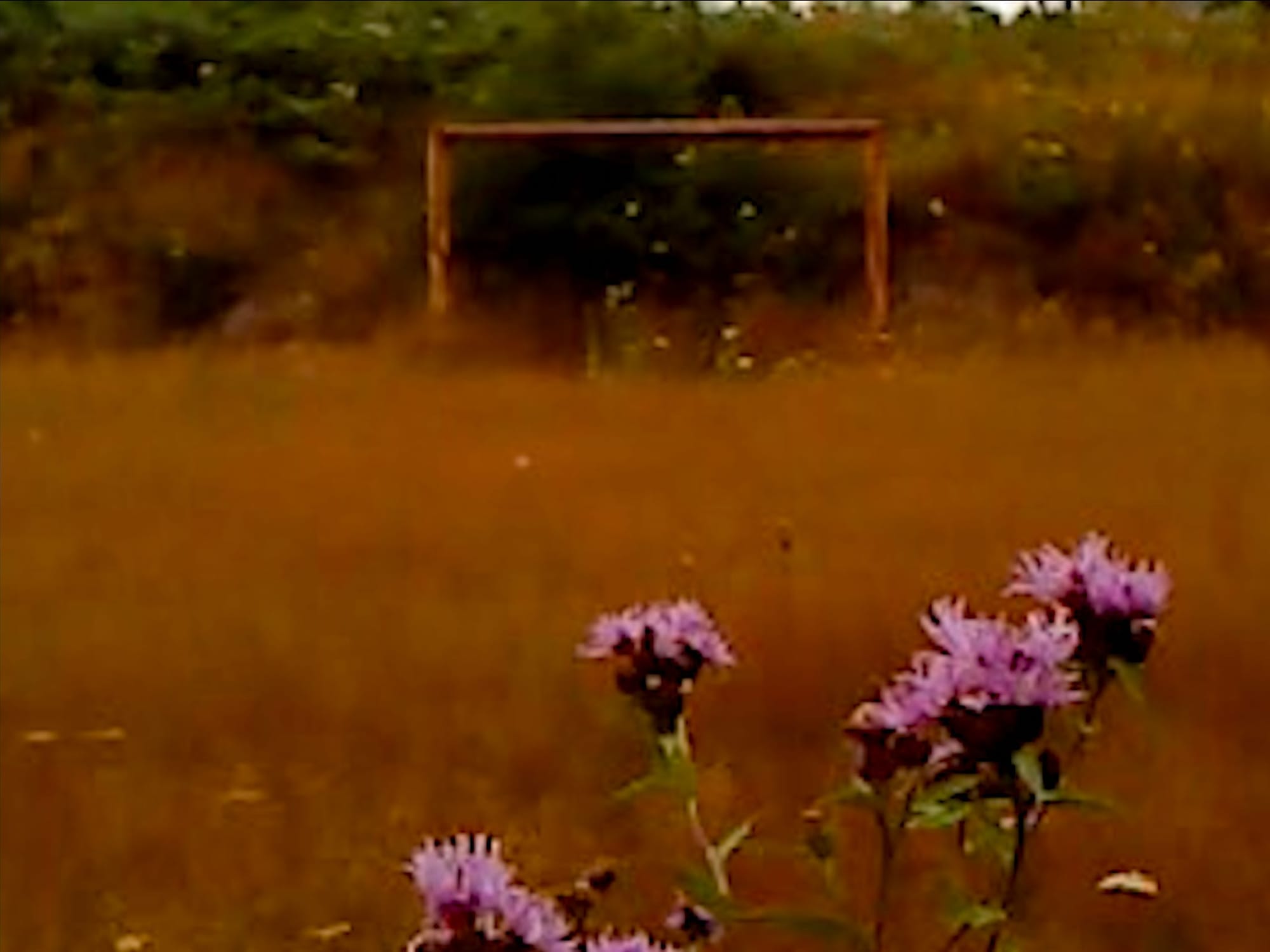
Because of these aspects, namely the repetitive nature and the blurry pixelated images shot on the outdated phone camera, Dry Leaf is a very hypnagogic film. It exists in a space between waking life and dream state. The natural rural scenes of mountains, fields, and forests are mystifying, like they belong in a fantastical world, and when captured in the digital haze of the Sony Ericsson, they feel like they're hallucinated by a brain deep within an REM cycle. Combined with its slow pace and three-hour runtime, the different scenes can feel indistinguishable from one another as if one scene morphs and blurs into the next. Though they’re objectively different, they feel like phantasms that have been seen before.
Within the film itself, Koberidze creates an illusion of memory, where an image on screen is reflective of a previous one, like it's a distorted recollection of a previous scene. An illusion of memory is easy to create by playing with old images in media by being selective with what is presented, which can alter perceptions of the past. This is akin to what Koberidze has done with capturing these countryside landscapes through a mid-2000s phone camera. The Sony Ericsson warps the memory of the past, like how the mind does whenever it remembers something it has experienced, and generates familiar images that haven’t actually been experienced before.
There are elements in the movie that tug you from this dream state back into waking life, like the late 2010s Subaru Forester that Irakli drives throughout the film, or the many jerseys of Khvicha Kvaratskhelia – the Georgian football superstar who plays for European champions PSG and helped vitalize the national team – worn by the kids playing on the pitches. There are also the many conversations the characters have with the locals, including a visit to Irakli's uncle, that show the connection between people in shared cultural experience with things like football or the land they live on. These aspects are a reminder that what’s shown in Dry Leaf is real life and is happening right now in the present, but suspended between two states.
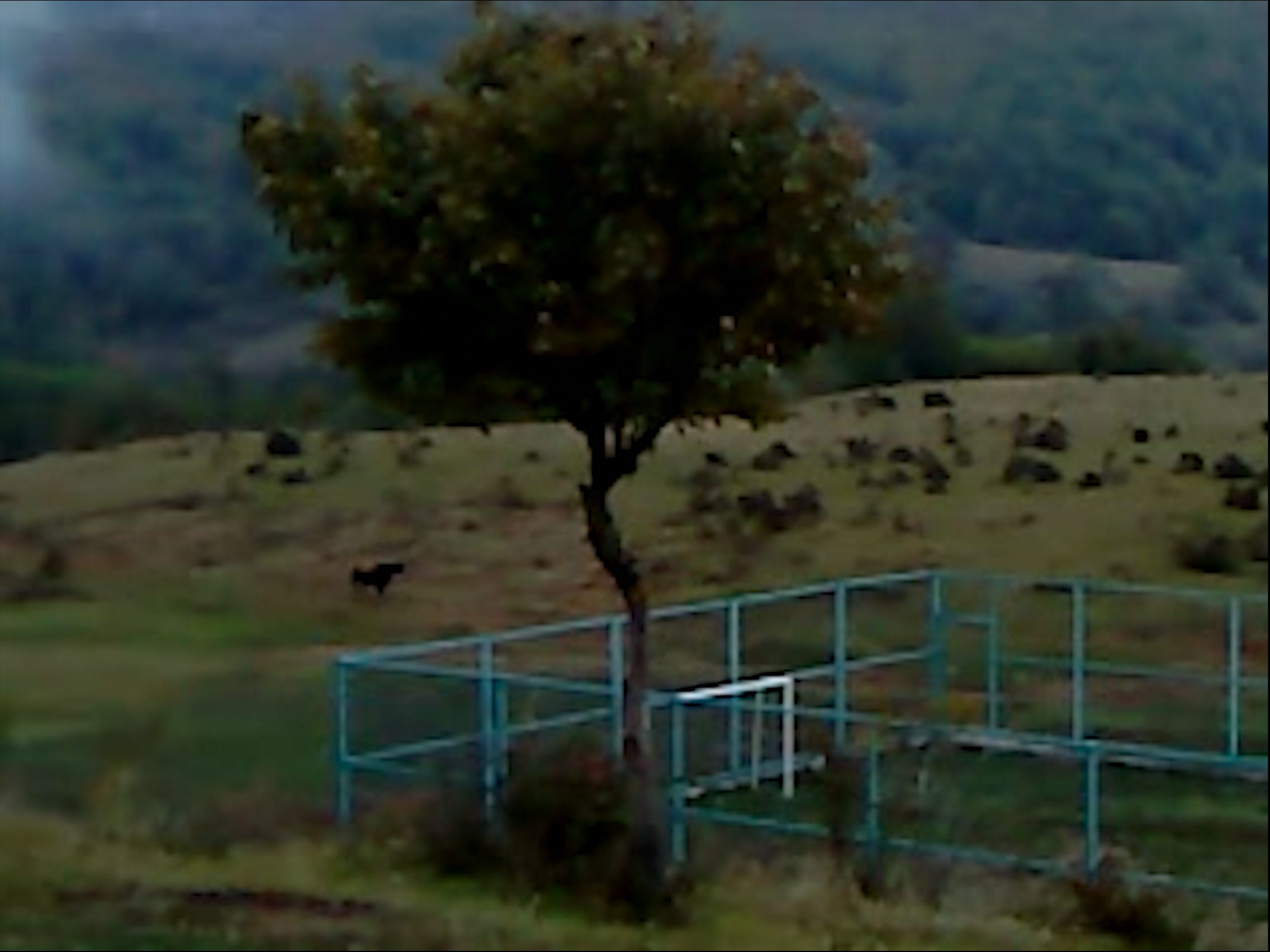
False or fleeting memory guides Irakli through the film, not in the sense that he has dementia or amnesia, but that he’s holding onto a past that was never there, constructed in his own mind through the shifting recollections of his memory. He’s accompanied by and chasing ghosts. The character Levan is invisible. He speaks and interacts with Irakli as he accompanies him, and is given space in frame like he’s there, but no one is there with Irakli. His daughter Lisa is never seen either. Her photograph when it’s shown to the locals is either facing away from the camera, or too out of focus in the low pixelated quality to distinguish her appearance. At the end of the film, Lisa decribes the location where she is at and that Irakli was there at one point underneath the flickering streetlamp, but the two never see each other face to face.
In the end, Lisa tells her father in a letter that he can come to her if he wants, and she’d be glad to see him, but it’s proposed as if it won’t solve what Irakli is searching after. What the narrative of the film feels representative of is a strained relationship, where Lisa has tried to move on from the tore down places in Tsibili that made up her childhood and now has more independence, while Irakli hasn’t fully let go, perhaps reminiscing and stuck in a past that has become dilapidated. The overgrown and deserted football pitches and the spaces in-between that Koberidze films and Irakli wanders are emblematic of that place. Dry Leaf is a beautifully psychedelic and aesthetically dense viewing experience that blurs the waking present with the dreamed past.
Dry Leaf is now showing at FilmScene in Iowa City. You can see showtimes here.
Likely one of several written pieces on hypnagogia, media, football, or the intersection of all three.